

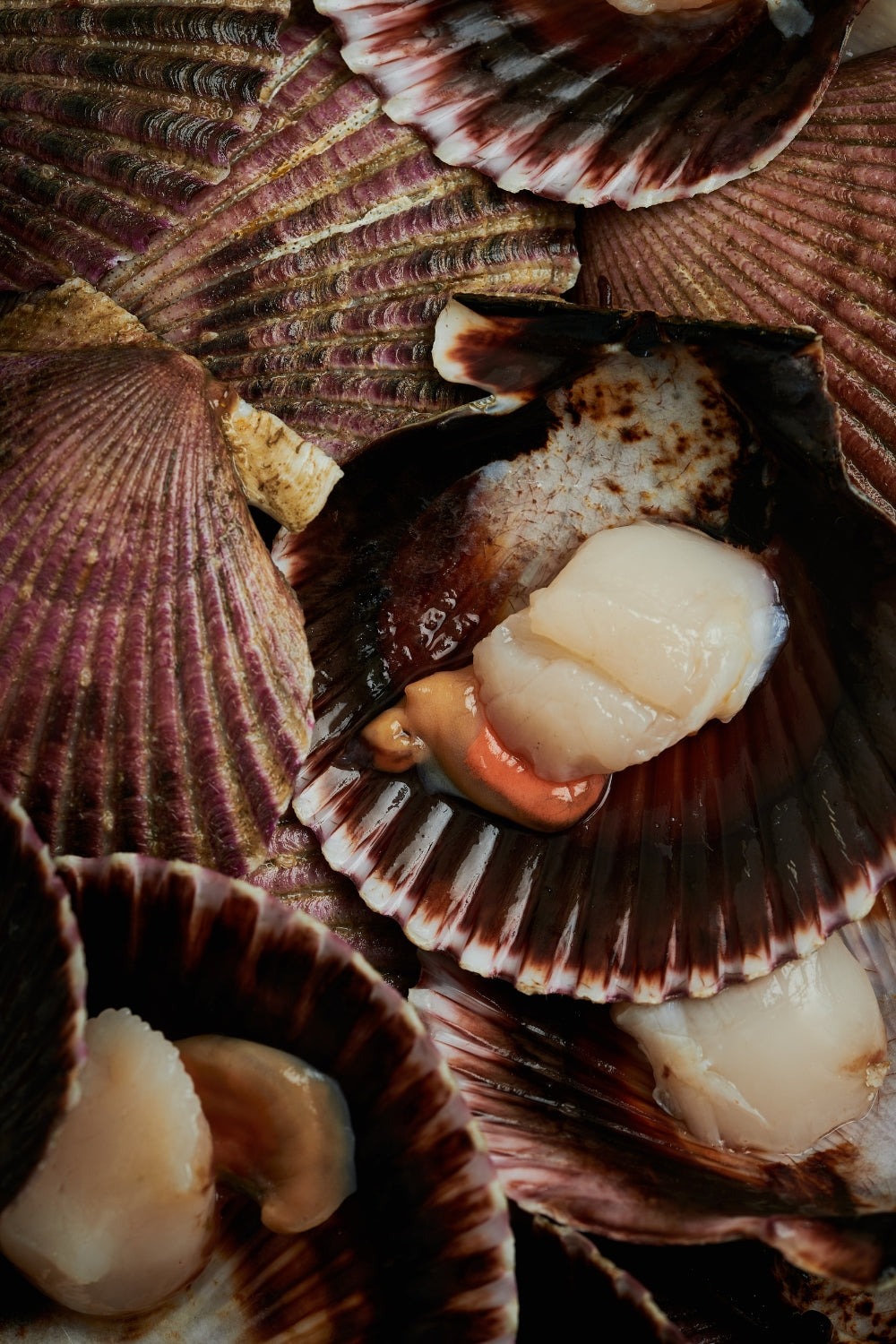
Medium-sized scallops
Scientific name
Argopecten purpuratus
English name
Peruvian calico scallop
General description
The calico scallop (Argopecten purpuratus) is one of the most emblematic mollusks of the Southeast Pacific, valued for its ecological importance and its relevance in gastronomy. It inhabits sandy and muddy-sandy bottoms in coastal areas, where it lives freely or slightly buried, constantly filtering water to feed on phytoplankton and organic matter.
Its biology reflects a close connection with marine productivity: its abundance depends on the availability of nutrients and favorable oceanographic conditions. Additionally, it plays an important role as a filter feeder, contributing to the balance of the ecosystem.
Unlike many bivalves, it has the ability to move by opening and closing its valves, generating jets of water that allow it to escape from predators. Its shell, radially shaped and with variable colors—from white to purple tones—makes it an easily recognizable species representative of the Peruvian coast.
Medium-sized scallops