

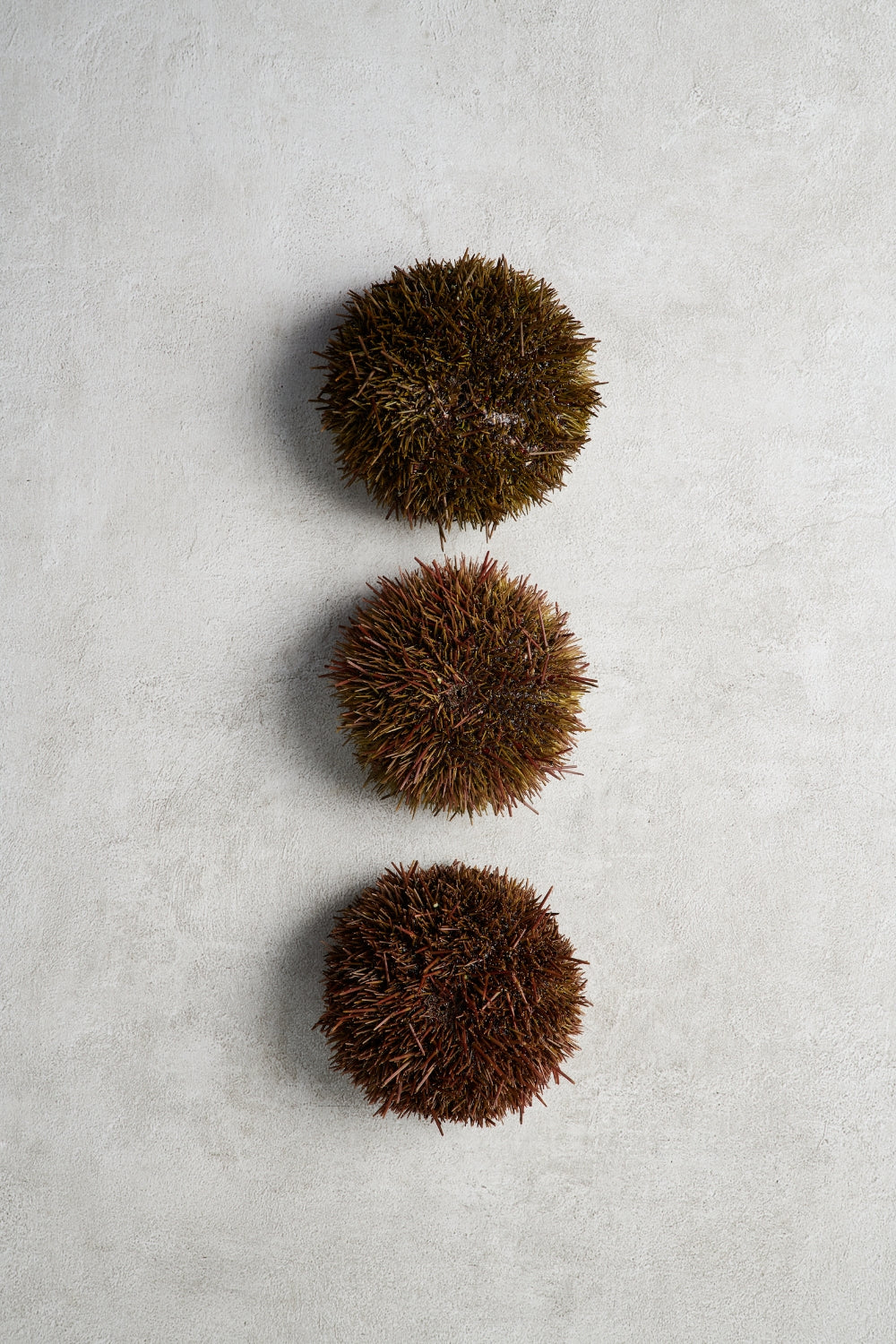
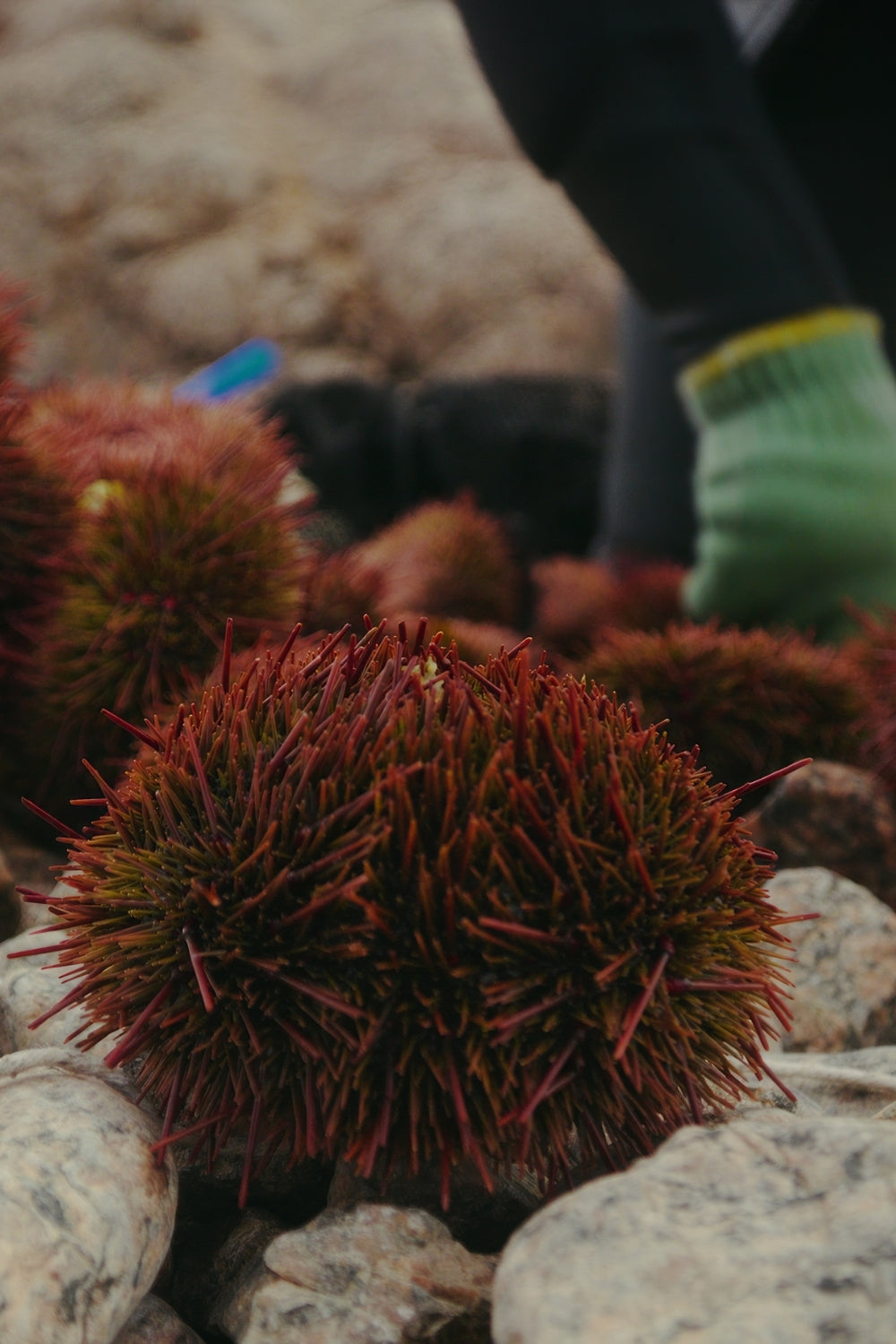
Red sea urchin
Scientific name
Loxechinus albus
English name
Red sea urchin
General description
The red sea urchin (Loxechinus albus) is one of the most representative species of the rocky ecosystems of the southeastern Pacific, especially along the coasts of Peru and Chile. It inhabits hard bottoms, where it takes refuge in crevices, caves, and areas with high algal cover, on which it primarily feeds.
This echinoderm plays a key ecological role as a herbivore: it regulates macroalgae growth and contributes to the balance of underwater forests. However, its abundance must be kept in balance, as both overexploitation and uncontrolled proliferation can significantly alter the ecosystem.
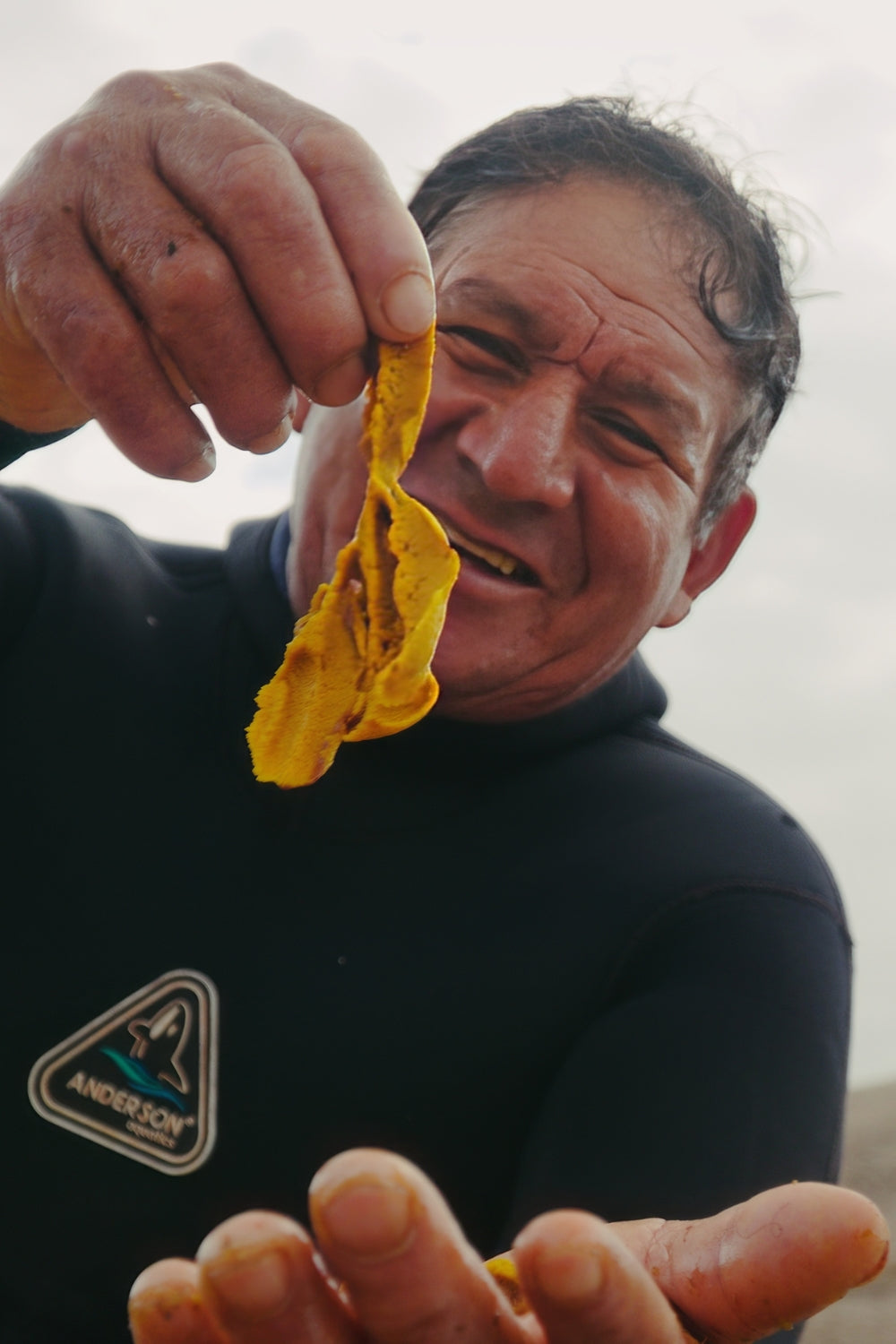
Its structure is composed of a rigid shell covered with mobile spines, which serve as a defense mechanism against predators. Inside are the gonads—gastronomically known as “tongues” or “coral”—which concentrated its culinary value.
It is a species highly sensitive to fishing pressure, especially because its growth is relatively slow and its population recovery depends on proper and localized management.